


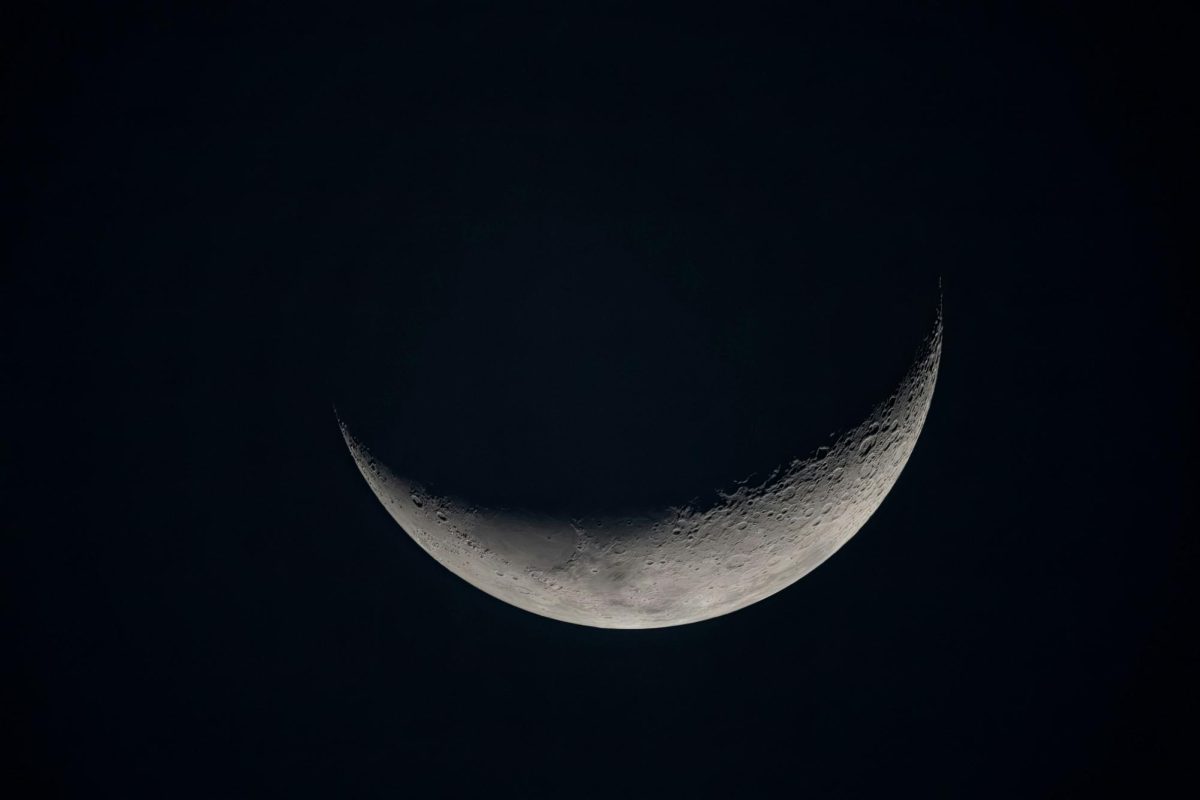





















On April 1, 2026, at 11:35 pm UTC (5:35 pm CDT), astronauts Reid Weisman, Christina Koch, Victor Glover, and Jeremy Hansen boarded NASA’s Orion spacecraft. They circled Earth, studied the unexplored dark side of the moon, then returned with research. Although an impressive mission overall, what, exactly, is there to research? Were the Astronauts ensured their safety? And what comes after Artemis II? What’s next? Asteroid protection? Moon colonies? Humans on Mars?
With humans not exiting Earth’s orbit since Apollo 17 in 1972, a mission as impressive and expensive as Artemis II had to have had an important objective. Outside of seeing the dark side of the moon with human eyes, the mission was designed to test the Orion spacecraft’s long-term space travel capabilities. Once in Earth’s orbit, the crew tested the ship’s maneuverability through space, as well as emergency supplies like water dispensers and oxygen masks. Throughout the whole mission, consistent communications, automated and manual adjustments to trajectory, and the impact of the sun’s radiation were tested as well. Once behind the moon, the crew operated without connection to Earth for 40 minutes, testing completely independent operations. After minor issues with the heat shield, the crew returned safely on April 11, 2026, 12:07 UTC (April 10, 7:07: p.m. CDT).
Since the unmanned Artemis I mission in 2022, many life-threatening issues have been discovered outside of lab testing. Specifically, the heat shields exhibited inadequate results when compared to lab tests. Jefferson’s regular and AP Physics I and II teacher, Mrs. Beck, comments, “The most difficult part of any space mission is the reentry into Earth’s atmosphere. During this part, the capsule is almost as hot as the sun and 30 times the speed of sound”. The heat shield protected the inner cabin, but it should not have eroded as much as it did, possibly endangering future crewmembers and missions. After more testing, it was ensured the original heat shield would keep the cabin safe, so NASA continued to use it for Artemis II this year.
As for the next Artemis missions to come, NASA hopes to construct a lunar base to test human life independent from Earth, as well as use the Moon’s weaker gravity to travel to Mars with less effort. Possible ice on the Moon could be converted to oxygen as well, so there is much to learn and gain from life on the Moon and eventually Mars.
The purpose of Artemis II is not the longevity of the human race, but the strive for exploration and discovery of all things unknown as the first humans did. We hope to learn all we can about our surroundings. The knowledge we have gained is worth more than any metal or gem we find. The best we can hope for is we know how to use our knowledge.